
I built a manager for my private F-Droid repository
I manage few Android apps for myself and my family. For obvious reasons I do not want to bother with Google Play, so I am using private F-Droid repository. Doing it by hand was a bit annoying: remembering keytool usage for signing keys, keeping track of which versionCode was last, and incrementing that when build failed, regenerating the index manually if something broke in CI, making sure that nginx static files hosting works etc. Some of this was automated.
But automation brakes from time to time, or Fdroid update or Flutter update broke something. It was not harderst thing I was doing but it was not documented and I rarelly used it. So it was breaking when I was actually needing that and then I had to fix it myself. My plan in the beginning was to use ready solution, but Fdroid package server Gui that I was able to find then was looking really outdated 8 years ago. Right now I do not even see it on their documentation page.
Because of all of this I wrote fdroidmgr
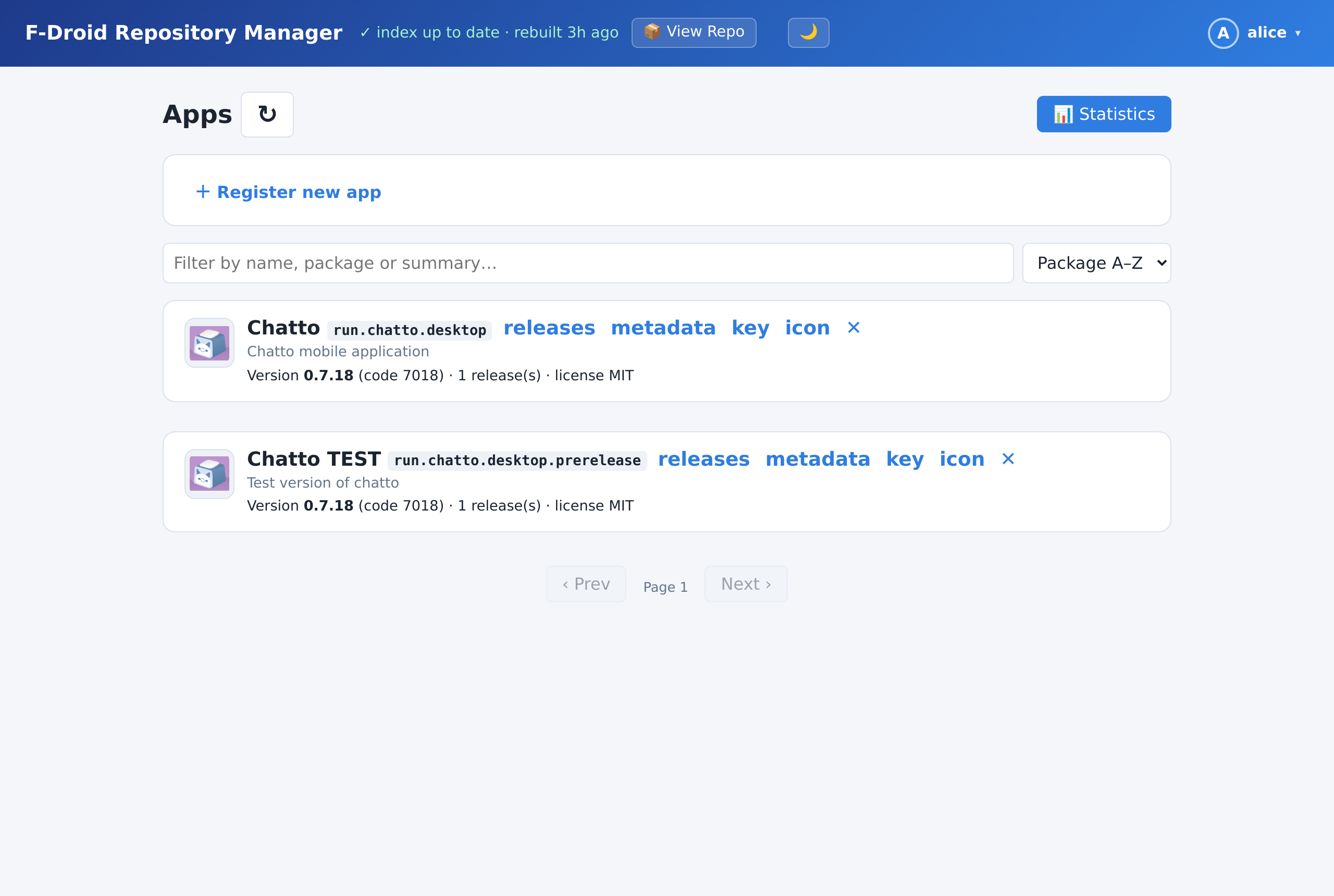
. I meant it to be really easy to use solution: single container that you can just start connect to your IdP and use it. Is is using SQLite database so you dod not have to start another container with database. And it have fairly nice web UI on top.
How to use it
Sign-in is your own OIDC provider - Keycloak, Gitlab or similar - configured through a first-boot wizard that is started after first run.
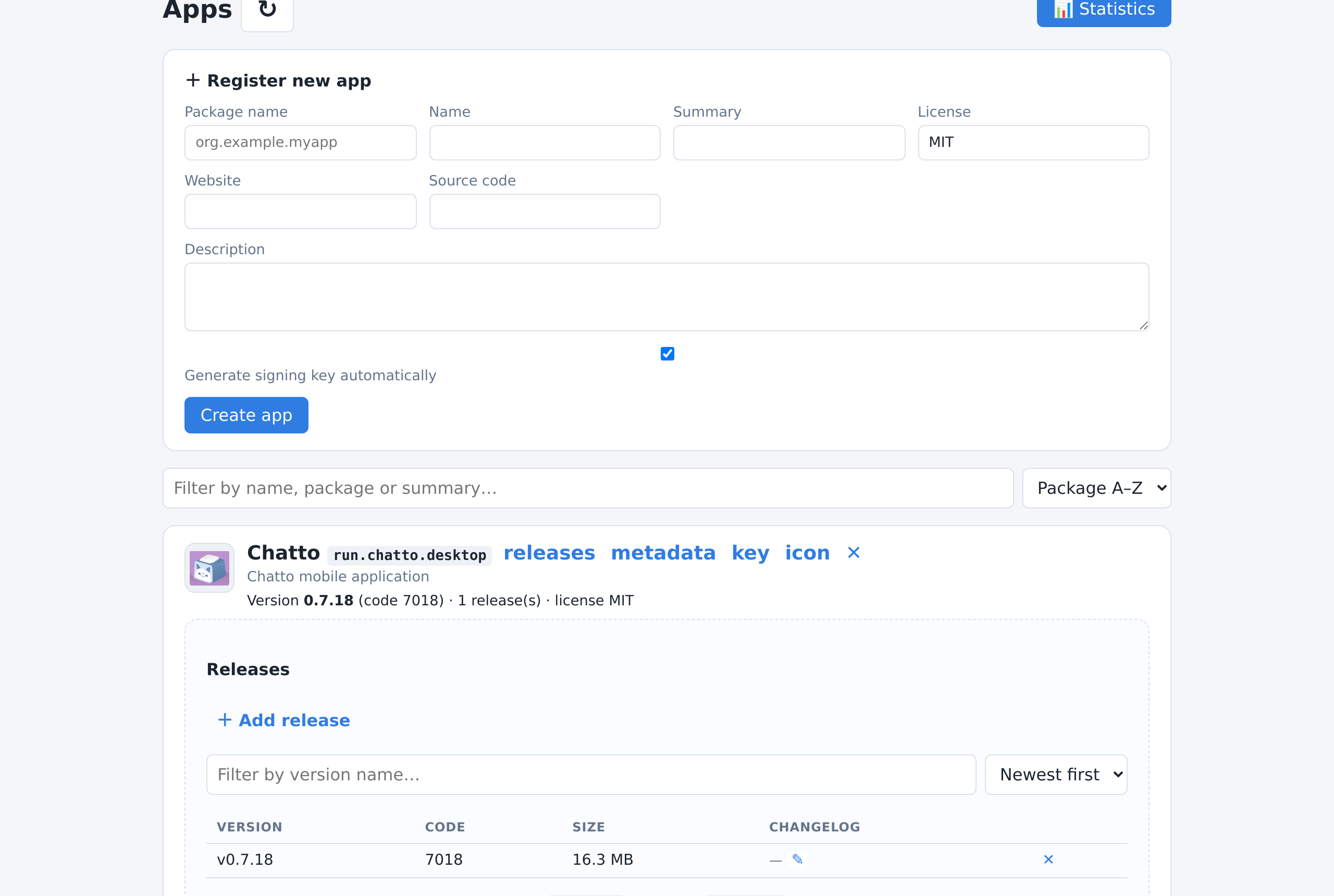
You need to register an app first. Provide name, tick “generate signing key” and that is all. In the background FdroidManager creates set of signing keys. When you add an APK in the Releases tab it is signed with generated key, published, stores it, and regenerates the F-Droid index.
It can be done from Web UI like in the API. To make it even simpler manager can return you “hint” of versionCode for new releases, so pipeline can ask, and build new APK and then send it off to FdroidManager.
Fdroid repository is some directory with index files, screenshots and apks. Those are served via HTTP by web server bundled in the image. Keys are stored, securely and encrypted. All the necesary files for keeping index up to date are stored in different path then static files for Fdroid repository.
Passwords are encrypted at rest with a master key and decrypted only at the moment of signing.
On the phone you just need to provide your Fdroid repository URL with its key. It can be done by scanning QR code generated in the browser. Then your private apps show up next to the public ones.
Your user is able to manage set of api keys that can be used to manage apps and their releases, so it is possible to publish them unattended.
Tech details
ASP.NET Core on .NET 10, everything in one project: API, web UI being Alpine JS app, Fdroid repository (static files) and Fdroid and Android tools - no Android SDK on the host and no external toolchain is necesary.
Frontend is plain HTML with a small amount of JavaScript and some utility classes generated by UnoCSS.
It is early version: 0.5.x and it is MIT licensed. It is rarelly necesary for anybody to manage mobile apps themselves, unless you like to tinker with stuff yourself, or self host your own data yourself, so probably not interesting solution for most people but if you like that kind of stuff, it may be useful!